


James McWhae
James McWhae is a freight industry analyst and editorial writer focused on freight forwarders in Australia, cargo logistics, shipping systems, and supply chain topics. He writes clear, experience-driven content that helps readers understand the real mechanics behind freight movement and logistics decision-making.
Freight forwarding is one of the most important functions behind the movement of goods across Australia and between Australia and the rest of the world. While many businesses think of freight as simply transport, the actual process is broader, more structured, and far more dependent on coordination than most people realise. Cargo does not move efficiently because a truck, vessel, or aircraft exists. It moves efficiently because the logistics around it are planned, documented, timed, and managed properly.
That is where freight forwarders come in.
In Australia, freight forwarders play a central role in helping businesses manage domestic and international shipments across a large and geographically demanding market. They help organise the movement of goods through road freight, air freight, sea freight, warehousing, customs processes, and delivery networks, while also reducing the administrative friction that often causes delays, added cost, and operational confusion.
This guide explores the full picture behind freight forwarders Australia, including what they do, how freight forwarding works, the main shipping options available, the role of customs and documentation, what shapes freight costs, and how businesses can choose the right logistics partner for their needs.
What Is a Freight Forwarder?
A freight forwarder is a logistics coordinator that helps arrange the movement of goods from origin to destination. The forwarder does not simply book transport. The real role is to connect the different parts of the freight process into one workable chain.
That may include:
- planning the shipment
- selecting the transport mode
- booking carriers
- preparing or coordinating documents
- supporting customs clearance
- arranging pickup and delivery
- monitoring the cargo in transit
- resolving issues if the shipment is delayed or disrupted
In practice, the freight forwarder often becomes the operational link between the shipper, the carrier, the warehouse, the customs process, and the consignee.
This matters because shipping problems are rarely caused by only one issue. Most freight problems happen when one stage of the chain is not properly aligned with the others. Freight forwarding exists to reduce that mismatch.
Why Freight Forwarders Matter in Australia

Australia has a freight environment that is shaped by distance, trade dependency, and route complexity. Domestic shipments often move across long interstate corridors between major commercial cities such as Sydney, Melbourne, Brisbane, Perth, Adelaide, and Darwin. International shipments move through ports, airports, warehouses, and border processes before they can be delivered into the local market or exported overseas.
That creates several realities:
- transit planning matters
- mode selection matters
- documentation matters
- customs readiness matters
- delivery coordination matters
- communication matters
A business may have strong products, good suppliers, and clear sales demand, but if freight is handled poorly, the operational consequences show up quickly. Inventory arrives late. customers wait. production slows. costs rise. internal teams waste time chasing updates.
In a country like Australia, freight forwarding is not just a support task. It is part of business continuity.
What Freight Forwarders Do in Australia
The role of a freight forwarder in Australia can vary depending on the shipment, but the core functions usually remain consistent.
Shipment Planning
Before cargo moves, the forwarder helps assess:
- what the goods are
- how much they weigh
- how much space they occupy
- where they need to go
- how quickly they need to arrive
- whether any special handling applies
- whether the shipment is domestic or international
This planning stage is more important than many businesses assume. A poor decision made here often creates bigger cost or delay later.
Mode Selection
Freight forwarders help decide whether goods should move by:
- air freight
- sea freight
- road freight
- rail freight
- a multi-modal combination
The right mode depends on urgency, cost, cargo type, and route practicality.
Carrier Coordination
The forwarder works with carriers and transport providers to secure the right freight solution for the shipment. That may involve airlines, shipping lines, trucking operators, depot networks, or specialist logistics services.
Documentation Management
Freight is document-heavy by nature. The forwarder helps coordinate the paperwork that supports the movement, clearance, and release of cargo.
Customs and Clearance Support
For international shipments, freight forwarders often help coordinate the customs side of the movement so the shipment is better prepared for import or export processing.
Delivery Coordination
Freight does not become irrelevant once it lands at a port, airport, or depot. The final stage of movement still needs to be managed properly. Freight forwarders help close that last gap.
Domestic Freight Forwarding Services Across Australia
Domestic freight forwarding involves the movement of goods within Australia. It may not involve border crossing, but that does not mean it is simple. Interstate freight across Australia often requires serious coordination due to route length, delivery conditions, timing needs, and varying regional access.
Domestic freight forwarding may support:
- interstate stock transfers
- retail replenishment
- spare parts movement
- industrial supply freight
- urgent commercial cargo
- medical or healthcare logistics
- mining and remote area support
- warehouse and distribution movement
Road freight is usually the dominant domestic mode, but domestic air freight also plays an important role where speed is commercially critical.
Domestic Freight Forwarding Services Across Australia
International Freight Forwarding from Australia
International freight forwarding covers imports into Australia and exports out of Australia. This is where freight becomes more documentation-heavy and more dependent on border-related accuracy.
International freight forwarding may involve:
- overseas supplier coordination
- export handling in Australia
- import handling into Australia
- air or sea freight bookings
- customs-linked document flow
- delivery coordination at destination
- cargo movement through multiple international stages
International shipping is where many businesses underestimate the number of moving parts involved. A shipment can be commercially straightforward and still become operationally difficult if the documentation, timing, and clearance processes are weak.
Businesses involved in international shipping should also understand broader Australian import requirements before cargo reaches the customs clearance stage.
International Freight Forwarding from Australia
Main Freight Modes Used in Australia
Freight forwarding in Australia revolves around several key transport modes. Each has its own strengths, limitations, and commercial logic.
Air Freight
Air freight is the faster shipping option and is usually chosen when urgency matters more than cost.
It is often used for:
- urgent cargo
- high-value goods
- medical products
- critical spare parts
- time-sensitive stock
- short-cycle commercial inventory
Air freight works well when delay would create a bigger commercial problem than the premium freight rate.
Sea Freight
Sea freight is the more economical choice for larger or heavier shipments that do not require immediate transit.
It is often used for:
- containerised cargo
- bulk inventory
- machinery
- larger commercial shipments
- planned import cycles
- lower-urgency exports
Sea freight is slower, but usually stronger on cost efficiency where volume matters.
Road Freight
Road freight is the backbone of domestic logistics across Australia. It supports:
- metro freight
- interstate freight
- regional delivery
- depot-to-depot movement
- final-mile commercial delivery
For domestic shipments, road freight is often the default option unless the cargo is highly urgent.
Rail Freight
Rail freight plays a supporting role for some long-haul inland corridors and higher-volume freight programs. It is not the answer for every shipment, but it can be useful where the route and shipment profile support it.
Multi-Modal Freight
Some shipments use more than one transport mode. For example:
- truck pickup
- air or sea linehaul
- road delivery at destination
This is where the freight forwarder’s coordinating role becomes especially valuable.
Air Freight vs Sea Freight: Which Option Makes More Sense?
This is one of the most common freight decisions businesses face.
Air freight usually makes more sense when:
- the cargo is urgent
- the goods are high in value
- the shipment is relatively small
- stock continuity matters
- downtime or delay would be costly
Sea freight usually makes more sense when:
- the shipment is large or heavy
- timing is flexible
- cost efficiency is a priority
- the goods are part of planned replenishment
- container movement is practical
The wrong way to make this decision is to ask only which mode is cheaper. The better question is which mode creates the better business outcome.
Air Freight vs Sea Freight in Australia: Which Option Makes More Sense?
How the Freight Forwarding Process Works
Freight forwarding is best understood as a sequence of linked stages.
1. Shipment Assessment
The cargo is reviewed based on:
- weight
- dimensions
- volume
- packaging
- destination
- urgency
- handling needs
- domestic or international movement
2. Quotation and Transport Planning
The forwarder identifies the most suitable freight option and builds the shipment scope around that solution.
3. Booking and Scheduling
Once confirmed, the shipment is booked with the relevant carrier or logistics provider.
4. Documentation Preparation
The supporting documents are prepared or reviewed so the shipment is operationally and administratively ready.
5. Pickup and Handover
The cargo enters the freight chain through collection, depot delivery, terminal handover, or warehouse dispatch.
6. Main Transit
The goods move through the selected freight mode or combination of modes.
7. Customs and Clearance, Where Relevant
For international freight, cargo must be properly cleared before release.
8. Final Delivery
The shipment is delivered to the consignee, warehouse, commercial site, or distribution point.
This process sounds linear, but in reality each stage affects the next one. Weak data at stage one often causes visible disruption at stages six, seven, or eight.
Key Freight Forwarding Documents
 Documentation is one of the most important parts of freight forwarding. Goods may be physically ready to move, but if the paperwork is inconsistent or incomplete, the shipment may still be delayed.
Key freight documents often include:
- commercial invoice
- packing list
- Bill of Lading
- Air Waybill
- import declaration
- export declaration
- Certificate of Origin
- dangerous goods documentation, where relevant
- permits or supporting certificates for regulated goods
The real issue is not only whether the documents exist. It is whether they match each other clearly and accurately.
Freight Forwarding Documents Explained for Australian Shipments.
Customs Clearance in Australia
Customs clearance is one of the most important parts of international freight forwarding. Goods entering or leaving Australia must be properly declared and supported by the right shipment information.
Customs clearance can affect:
- timing
- release
- duties and taxes
- inspections
- compliance risk
- storage exposure
- delivery scheduling
Many businesses focus heavily on the transport side of shipping and underestimate the customs side. That is a mistake. Cargo can move across oceans or through the air on time and still fail operationally if the customs side is weak.
What Affects Freight Forwarding Costs in Australia?
Freight forwarding costs are influenced by more than distance. Some of the main cost drivers include:
- actual weight
- cubic volume
- chargeable weight
- shipping mode
- route complexity
- urgency
- fuel-related surcharges
- customs and clearance costs
- handling and storage
- pickup and final delivery
- special cargo requirements
- regional or remote access
This is why freight quotes should not be compared only by headline price. Two quotes may appear similar until one excludes key service elements that later appear as additional costs.
How Freight Forwarding Costs Are Calculated in Australia
Industries That Commonly Use Freight Forwarders in Australia
Freight forwarding supports a broad range of industries across Australia.
These often include:
- retail and wholesale
- manufacturing
- mining
- construction
- agriculture
- healthcare and medical supply
- automotive parts
- e-commerce
- industrial equipment
- remote and regional supply chains
The common factor is not industry label alone. It is the need to move goods with reliability, timing control, and operational structure.
Some businesses use freight forwarders for occasional complex shipments. Others use them as part of their everyday supply chain.
Common Challenges in Freight Forwarding
Freight forwarding brings recurring operational challenges that businesses should not ignore.
Documentation Errors
Missing or inconsistent documents remain one of the most common causes of delay.
Wrong Mode Selection
Choosing air when sea would do, or sea when timing is critical, creates unnecessary cost or operational damage.
Poor Packaging
Even well-planned freight can suffer if the cargo is not packed properly for the transport method.
Weak Communication
If updates are unclear, internal planning becomes harder and issues often escalate.
Underestimating Destination Costs
Importers often focus too much on origin cost and not enough on final landed cost.
Assuming Every Route Works the Same Way
Metro, regional, and remote freight should not be planned as if they are operationally identical.
These are not minor details. They are the recurring sources of avoidable freight friction.
How to Choose the Right Freight Forwarder in Australia
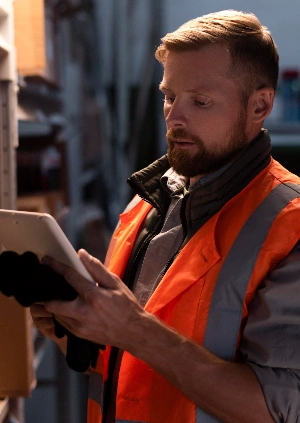 Choosing a freight forwarder should not be based only on finding the lowest number on a quote.
The stronger selection criteria include:
- relevant experience with the shipment type
- service scope
- domestic and international capability, where needed
- communication quality
- pricing clarity
- documentation discipline
- customs awareness
- realistic timelines
- ability to handle problems when things change
A freight forwarder that communicates clearly and prices realistically is often more valuable than one that looks cheaper but creates confusion later.
How to Choose the Right Freight Forwarder in Australia
What Good Freight Forwarders Usually Do Well
A capable freight forwarder usually shows a few clear strengths:
- asks the right questions about the shipment
- explains transport options logically
- identifies risks early
- manages documents carefully
- communicates in a practical way
- provides realistic timing, not inflated promises
- supports smoother customs and delivery outcomes
- treats freight as a process, not just a booking
That is what businesses should actually be looking for.
Common Mistakes Businesses Make With Freight
Many freight problems come from weak assumptions rather than dramatic failures.
Some common mistakes include:
- choosing based only on quote price
- ignoring chargeable weight
- leaving documents too late
- failing to understand the product category
- assuming customs is only paperwork
- using urgent freight reactively because planning was poor
- underestimating regional or remote delivery complexity
- comparing freight providers without matching service scope properly
Businesses that improve these decision points usually improve freight outcomes quickly.
Freight Forwarding and the Bigger Supply Chain Picture
Freight forwarding should not be viewed as an isolated transport task. It sits inside the wider logistics and supply chain system.
Freight decisions affect:
- inventory availability
- customer delivery performance
- warehouse planning
- replenishment timing
- production continuity
- landed cost
- working capital exposure
- service reliability
This is why freight forwarding matters strategically. The shipment itself is only one visible part. The business consequences around it are usually bigger.
A company that treats freight as an afterthought often pays for it elsewhere. A company that treats freight as a structured operational function usually becomes more resilient.
Final Thoughts
Freight forwarders in Australia do far more than arrange transport. They help organise how goods move across a complex logistics environment shaped by long domestic distances, international trade links, customs requirements, varied shipping modes, and delivery expectations that affect real business outcomes.
For domestic freight, they help coordinate interstate and regional cargo movement. For international freight, they help connect shipment planning with documentation, customs, and global transport. Across both, they reduce friction, improve structure, and help businesses avoid many of the administrative and operational failures that turn freight into a recurring problem.
The practical lesson is simple: freight forwarding is not just about moving cargo. It is about making cargo movement workable.
If a business wants better control over shipping, timing, cost visibility, and logistics reliability, understanding the role of freight forwarders is one of the best places to start.
FAQ
What does a freight forwarder do in Australia?
A freight forwarder helps coordinate the movement of goods by arranging transport, managing documents, supporting customs processes, and organising the freight chain from origin to destination.
Are freight forwarders only used for international shipments?
No. Freight forwarders are also widely used for domestic freight across Australia, especially for interstate, urgent, regional, or multi-stage shipments.
What is the difference between air freight and sea freight?
Air freight is faster and usually more expensive, while sea freight is slower but often more cost-effective for larger or heavier cargo.
Why is documentation important in freight forwarding?
Because freight documents support transport, customs, release, cargo identification, and operational accuracy. Poor documents often create delays and added cost.
How are freight forwarding costs calculated?
Costs are usually influenced by weight, volume, chargeable weight, shipping mode, route, urgency, handling, customs-related processes, and final delivery conditions.
How do I choose the right freight forwarder in Australia?
Choose based on relevant experience, communication quality, service scope, pricing clarity, and ability to manage the type of cargo and shipment routes your business actually uses.